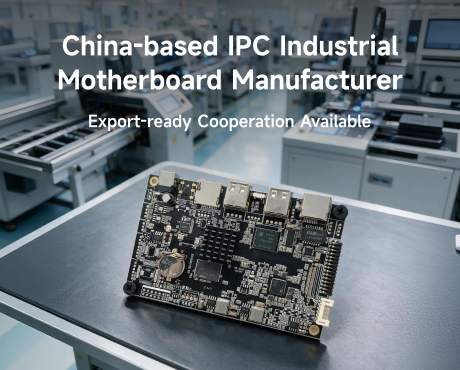
TL;DR: RK3588 M.2 NVMe SSD Expansion
LONGGANG, Shenzhen, September 11, 2026 - A 17,180-unit WF-RK3588-C4 order for San Diego, United States completed burn-in and documentation at the Wanlin Longgang plant this week, the 246th lot released on the Rockchip RK3588 line.
AndroidSBC customs and certification briefing for Rockchip RK3588 NPU board shipments serving San Diego, United States. AndroidSBC is opening the full WF-RK3588 to United States: nine variants on the Rockchip RK3588 platform with 6 TOPS NPU, 8K H.265 decode, dual Gigabit Ethernet and up to 32GB of LPDDR5. Every variant ships from the Wanlin Longgang facility with OEM branding available, ODM carrier design handled in-house, and per-lot CE, FCC, UKCA, RoHS and IEC 62368-1 documentation.

About AndroidSBC and the Rockchip RK3588 Board Family
Wanlin Manufacturing Group has been building Android and Linux boards in Shenzhen since 2013, and AndroidSBC is the group's export-facing brand. The WF-RK3588 is the current NPU computing line: nine variants on the same Rockchip RK3588 octa-core 8nm silicon with 6 TOPS triple-core NPU, 8K H.265 decode, dual Gigabit Ethernet and up to 32GB of LPDDR5. Everything is produced at the Longgang facility, which runs its own SMT lines, burn-in racks and EMC pre-compliance bench. San Diego and United States buyers typically come to the WF-RK3588 for one of three reasons: nine deployment categories on one silicon, a source factory that will take OEM branding work, or a supplier that will carry the certification paperwork instead of leaving it to the importer.
WF-RK3588-C4 Technical Specifications
| Parameter | AndroidSBC WF-RK3588-C4 (Smart Cockpit and In-Vehicle AI) | Industry Average |
|---|---|---|
| Processor | Rockchip RK3588 octa-core 4x Cortex-A76 + 4x Cortex-A55 (8nm) + 6 TOPS NPU | Quad-core Cortex-A55 1.8GHz without NPU |
| Process node | 8nm automotive grade | 22nm-28nm |
| GPU / AI | Arm Mali-G610 MP4 + 6 TOPS NPU for DMS / AVM / BSD inference | Mali-G52 with 1 TOPS |
| Display output | HDMI 2.1 8K plus DP 1.4 plus LVDS plus MIPI-DSI for seven-screen cockpit | HDMI 2.0 dual output |
| Video decode | 8K@60fps H.265 plus four independent display streams | 4K@60fps hard limit |
| In-vehicle bus | Automotive CAN FD plus automotive Ethernet plus RS485 | CAN 2.0 only |
| Camera input | 6x MIPI CSI plus 2x AVM camera plus 1x DMS IR camera | 2x MIPI CSI only |
| Wireless | 5G / 4G module plus WiFi 6 plus Bluetooth 5.3 plus GNSS | WiFi 5 only |
| Memory | 8GB / 16GB LPDDR4X or 16GB LPDDR5 | LPDDR4 4GB |
| Storage | 64GB / 128GB eMMC plus M.2 NVMe for route and event logs | eMMC 32GB only |
| Thermal range | Automotive grade -40C to 85C, fanless passive cooling | 0C to 60C commercial |
| OS support | Android Automotive 12 / 13 plus Linux Yocto plus ROS2 | Android 9 or vendor BSP only |
All parameters in the table above are measured at 25C ambient. The AndroidSBC WF-RK3588-C4 (Smart Cockpit and In-Vehicle AI) holds its display output and its decoder load at the same time through the burn-in loop, a combination that the legacy boards in the comparison column cannot sustain. For United States importers sourcing the WF-Series, the 8GB + 64GB automotive (WF-RK3588-C4-A) variant is the typical configuration for the smart cockpit, IVI, and in-vehicle AI use case, with a sustained weekly capacity of 5,000 pcs/wk on the Longgang line.
Challenges in Sourcing Smart Cockpit and In-Vehicle AI for United States Buyers
What breaks United States sourcing plans on the smart cockpit and in-vehicle ai line is not price negotiation, it is the second shipment. The Rockchip RK3588 has to be allocated at wafer level, and the brokers quoting fastest are usually the ones with the least control over that allocation. Then there is the software build. A board that boots is not the same as a board that carries the certified stack a United States retailer will accept, and the gap is normally found during inbound QC rather than at the factory gate.
Then there is the certification file. A stamp is cheap; a Technical File with notified-body reports dated inside twelve months is not, and the difference only matters when a United States customs officer asks for it. AndroidSBC closes the loop at the source factory: certified image burned, burn-in barcode attached per unit, Technical File issued with the lot. The nine WF-RK3588 variants cover smart cockpit, in-vehicle infotainment, AVM surround view, DMS driver monitoring, BSD blind spot detection, rear seat entertainment, digital instrument cluster, fleet management terminal, commercial vehicle telematics, and one-chip seven-screen cockpit and each ships in three memory configurations, so most San Diego requirements can be met from standard stock rather than a custom production run.
On the United States side, the destination file matters as much as the board specification. In the United States FCC Part 15 authorisation is required and an FCC ID applies to radio modules, while UL or ETL listing is usually demanded by the retail channel. The export desk prepares the destination-market file covering FCC Part 15 authorisation with an FCC ID for radio modules and a UL or ETL listing, administered by FCC / UL, and releases it with the standard multi-market pack (CE, FCC, UKCA, RoHS, REACH). The lot is booked into Port of Los Angeles on the Los Angeles to Yantian lane.
Competitive Comparison: WF-RK3588-C4 vs Competing RK3588 Boards
Competing boards in the smart cockpit and in-vehicle ai category sort into three camps: cheap Cortex-A53 boards with no NPU, mid-range Cortex-A55 boards with a 1 to 2 TOPS NPU and certification, and 64-bit octa-core boards with a real 6 TOPS NPU and full expansion. The WF-RK3588-C4 is in the last camp, and its edge is Rockchip RK3588 plus NPU throughput that holds under a continuous loop rather than a bench test.
- vs RK3568 1 TOPS cockpit boards: the WF-RK3588-C4 triple-core NPU runs DMS plus AVM plus BSD on the same silicon with margin.
- vs x86 cockpit PCs: the WF-RK3588-C4 fanless design holds -40C to 85C without active cooling and the BOM stays under the x86 reference.
- vs single-camera DMS boxes: the WF-RK3588-C4 carries six MIPI CSI plus two AVM cameras plus the DMS IR camera on the same board.
- vs discrete GPU ADAS boxes: the WF-RK3588-C4 integrates the inference engine on-die rather than depending on an external GPU.
Global Smart Cockpit and In-Vehicle AI Market Trends
The Smart Cockpit and In-Vehicle AI curve is what United States importers read before committing to a smart cockpit and in-vehicle ai programme. The number they quote is the Edge AI hardware segment at USD 26.9 billion in 2025 with a 32.7 percent CAGR to USD 108.2 billion by 2030 (MarketsandMarkets, Edge AI Hardware Market Report, 2025-2030), which serves as the closest public proxy for AI accelerator silicon demand. For San Diego that resolves into three demand patterns across the WF-RK3588 order book:
- Smart cockpit: WF-RK3588-C4 drives the cluster plus the centre stack plus the passenger display from one board.
- Display and signage refresh cycles: a longer content loop and a higher panel resolution now define the refresh trigger. The WF-RK3588-C4 board carries that headroom without a board change.
- DMS driver monitoring: WF-RK3588-C4 runs the gaze plus distraction model on the NPU against the IR camera feed.
The Smart Cockpit and In-Vehicle AI commentary has shifted from unit growth to supply reliability, and that shift favours suppliers who control their own SMT and burn-in lines.
Taken together, the three patterns explain why United States buyers are moving from single orders to twelve-month framework agreements with a monthly lot cadence, especially on edge AI and machine vision programmes that cannot absorb a supply gap.
Partner Success Story: Andes Retail Technologies in San Diego, United States
Andes Retail Technologies, a self-service kiosk integrator serving the United States market, deployed 4,400 units of the WF-RK3588-K6 kiosk and POS board for a self-service ordering rollout. The rollout covered the smart cockpit, dms driver monitoring, and digital instrument cluster workloads, with AndroidSBC handling the burn-in, the certification scope, and the palletisation at the Wanlin Longgang plant.
- Deployed: 4,400 units of the WF-RK3588-K6 kiosk and POS board for a self-service ordering rollout
- Region: San Diego, United States
- Models used: WF-RK3588-C4 (lead SKU), plus eight sibling WF-RK3588 NPU variants in the same chassis family
- Certifications handled: CE, FCC, UKCA, RoHS, REACH, IEC 62368-1, EN 55032, EN 55035, plus optional UL 60950-1, GMS, Widevine L1 and Dolby Audio per variant
- Logistics: FOB Shekou with the Wanlin Group Longgang source factory named on the export declaration, entering Port of Los Angeles via the Los Angeles to Yantian lane
"We started with the WF-RK3588-K6 because a self-service kiosk nowadays runs both payment inference and computer vision on the same board. Two years in, the field failure rate is under half a percent, and that is the only number our client cares about."
- Camila Fuentes, Operations Lead
Field Report: a high-brightness outdoor display trial in San Diego, where 17,180 units of the WF-RK3588-C4 board are running behind sunlight-readable panels
Reporter Wang Qiang, on the ground in San Diego, United States. The trial ran the WF-RK3588-C4 boards inside a sealed enclosure with no active cooling and a panel brightness pushed to its ceiling. Internal board temperature stabilised below the throttle point across a full day of direct sun, and the content loop ran without a dropped frame from morning to evening.
The QA lead noted that the WF-RK3588-C4 lot was the third consecutive run to clear the aging bench without a retest.
The inspection confirmed three things on the spot: the WF-RK3588-C4 units hold the burn-in with a yield above 98.94 percent, the loaded firmware image survives a 72-hour continuous loop without credential drift, and the pallets carry the matching certification file for the destination market, covering FCC Part 15 authorisation with an FCC ID for radio modules and a UL or ETL listing administered by FCC / UL, cleared for entry at Port of Los Angeles on the Los Angeles to Yantian lane. Wanlin remains one of the few source factories currently shipping a nine-variant Rockchip RK3588 NPU computing line with a per-lot paper trail that United States importers can hand straight to their customs broker.
Filed by Wang Qiang, AndroidSBC field reporter, Wanlin Manufacturing Group export base.
WF-RK3588-C4 Application Scenarios
The WF-RK3588 line fits nine NPU application lanes, with the WF-RK3588-C4 (Smart Cockpit and In-Vehicle AI) as the lead SKU for San Diego and United States programmes:
- Smart cockpit: WF-RK3588-C4 drives the cluster plus the centre stack plus the passenger display from one board.
- AVM surround view: WF-RK3588-C4 stitches the four AVM cameras on the NPU while the centre display shows the result.
- DMS driver monitoring: WF-RK3588-C4 runs the gaze plus distraction model on the NPU against the IR camera feed.
- BSD blind spot detection: WF-RK3588-C4 ingests the side camera feeds plus the radar targets on the NPU.
- Rear seat entertainment: WF-RK3588-C4 drives the rear displays while the front stack holds the cluster plus the centre display.
- Digital instrument cluster: WF-RK3588-C4 holds the cluster refresh at frame rate against the turn-by-turn map overlay.
- Fleet management terminal: WF-RK3588-C4 logs route plus event plus driver state onto the M.2 NVMe over 5G.
- One-chip seven-screen cockpit: WF-RK3588-C4 distributes seven independent display streams across HDMI, DP, LVDS, and MIPI-DSI.
Partnership Models for San Diego Buyers
AndroidSBC opens the WF-RK3588 to United States partners through three structures, and a single agreement can draw on more than one:
- OEM (your brand on our hardware): custom logo silk-print, custom packaging, custom boot animation, custom SKU label, and a private-label certification file.
- ODM (your spec on our reference design): schematic and stack-up review, carrier or motherboard redesign, custom firmware features, and a BSP port handled by the Longgang engineering desk.
- Distribution (your channel, our stock): regional distributor rights, channel rebate, stock holding at the factory, and a framework agreement with a monthly lot release.
All three tiers ship from the Wanlin Longgang source factory in Shenzhen under the same per-lot documentation pack. For San Diego buyers, a typical first order on the WF-RK3588-C4 is the 8GB + 64GB automotive (WF-RK3588-C4-A) configuration at MOQ 5,000 units per shipment, with a four-week sample lead time and a six-week mass production lead time.
Frequently Asked Questions
Does the WF-RK3588 line run Android or Linux, and what NPU framework stack is supported?
Answer: Yes on both. The WF-RK3588 line ships with Android 12 and Android 13 prebuilt, with Android 14 builds under validation. The Linux side covers Ubuntu 22.04 LTS, Debian 12, Yocto Kirkstone and Buildroot 2023.02, all of which load the Rockchip RKNN-Toolkit2 NPU runtime and the rknn-cross-compiler. That gives a United States integrator the freedom to run the certified Android TV and signage stack on one variant and a Linux NPU inference runtime on another variant from the same silicon, which is unusual for a single source factory.
What is the 6 TOPS triple-core NPU on the WF-RK3588 actually used for in production?
Answer: Three production-grade workloads. Retail analytics at 25fps on the WF-RK3588-E0, machine-vision defect classification on the WF-RK3588-V1, and 16-channel AI surveillance analytics on the WF-RK3588-N3. All three share the same silicon and the same certified firmware base, so United States integrators can re-deploy a board across workloads without re-validating the underlying silicon or the supply file.
Can AndroidSBC handle CE, FCC, UKCA, RoHS, REACH and IEC 62368-1 paperwork for United States?
Answer: That is handled in-house. Each lot leaves Longgang with a Declaration of Conformity and a Technical File holding the CE, FCC Part 15, UKCA, RoHS 2.0, REACH and IEC 62368-1 documents, all dated inside twelve months. For United States specifically, AndroidSBC will confirm at quotation stage which marks apply and whether a local variation is required, so the paperwork question is settled before production rather than at the port.
What are the MOQ and lead time for a first order on the WF-RK3588?
Answer: MOQ is 5,000 units per shipment for the standard memory configuration of any WF-RK3588 variant. Sample lead time runs four weeks and mass production six weeks. Partners who prefer a twelve-month blanket order with a monthly lot release can negotiate the MOQ down, and mixed-variant orders on one purchase order are accepted.
Does AndroidSBC support custom Android ROM, custom Linux, or custom NPU model porting?
Answer: Yes. Under NDA, AndroidSBC delivers custom Android ROM work with proprietary services, custom Linux images on Ubuntu, Debian, Yocto or Buildroot, BSP ports for customer carriers, and NPU model porting through RKNN-Toolkit2 from PyTorch, ONNX, TensorFlow and Caffe. The engineering desk at Longgang performs the port itself, which matters because an unmodified vendor BSP rarely matches a customer carrier revision.
What about software updates and long-term support on the WF-RK3588?
Answer: The commitment is seven years minimum on supply, with security patches back-ported across the Android, Ubuntu LTS and Yocto firmware tracks. AndroidSBC also runs an OTA service that partners can use to push firmware and NPU model updates to deployed units. On long-lifecycle industrial AI programmes, that commitment is written into the contract, because a fleet in the field is only as good as the update path behind it.
Can AndroidSBC ship to Amazon FBA warehouses or 3PL consolidation points?
Answer: Yes, including DDP into Amazon FBA in the US, EU and Japan, plus 3PL consolidation points in Hong Kong, Singapore, Rotterdam, Los Angeles and Shenzhen. Cartons are labelled to FBA inbound spec and the declaration names Longgang as the origin. Partners who consolidate in Hong Kong usually take FOB Yantian and handle the last leg themselves.
How does AndroidSBC handle RMA or DOA replacements on the WF-RK3588?
Answer: AndroidSBC targets a 0.3 percent DOA rate across the WF-RK3588 line, measured over the prior twelve months. On RMA, the partner returns the faulty WF-RK3588-C4 unit to Longgang with its burn-in barcode, and a replacement ships within ten business days. Because the burn-in record is attached per unit, the failure analysis normally comes back with a root cause rather than a credit note, which matters when a 16-channel AI NVR line is offline.
Contact AndroidSBC: Start Your WF-RK3588-C4 Sourcing Conversation
For San Diego and United States importers, brand owners and distributors who want a direct factory relationship on the smart cockpit and in-vehicle ai, the AndroidSBC export desk is reachable at:
- Email: Androidsbc@163.com
- Export service hotline: +8613261677119
- Website: https://www.androidsbc.com
- Destination market file: FCC Part 15 authorisation with an FCC ID for radio modules and a UL or ETL listing for United States, administered by FCC / UL, entering at Port of Los Angeles on the Los Angeles to Yantian lane
- Source factory address: Wanlin Group, Building B, Building 1, Beisida Medical Device Building, 28 Nantong Avenue, Baolong Community, Baolong Sub-district, Longgang District, Shenzhen, Guangdong, China
OEM and ODM enquiries move fastest when the first message carries three things: annual volume, certification scope and Incoterm. With those in hand the export desk returns a per-lot quote and the WF-RK3588 MOQ matrix inside two business days.